The Urbania ecosystem: much more than a Virtual Showroom
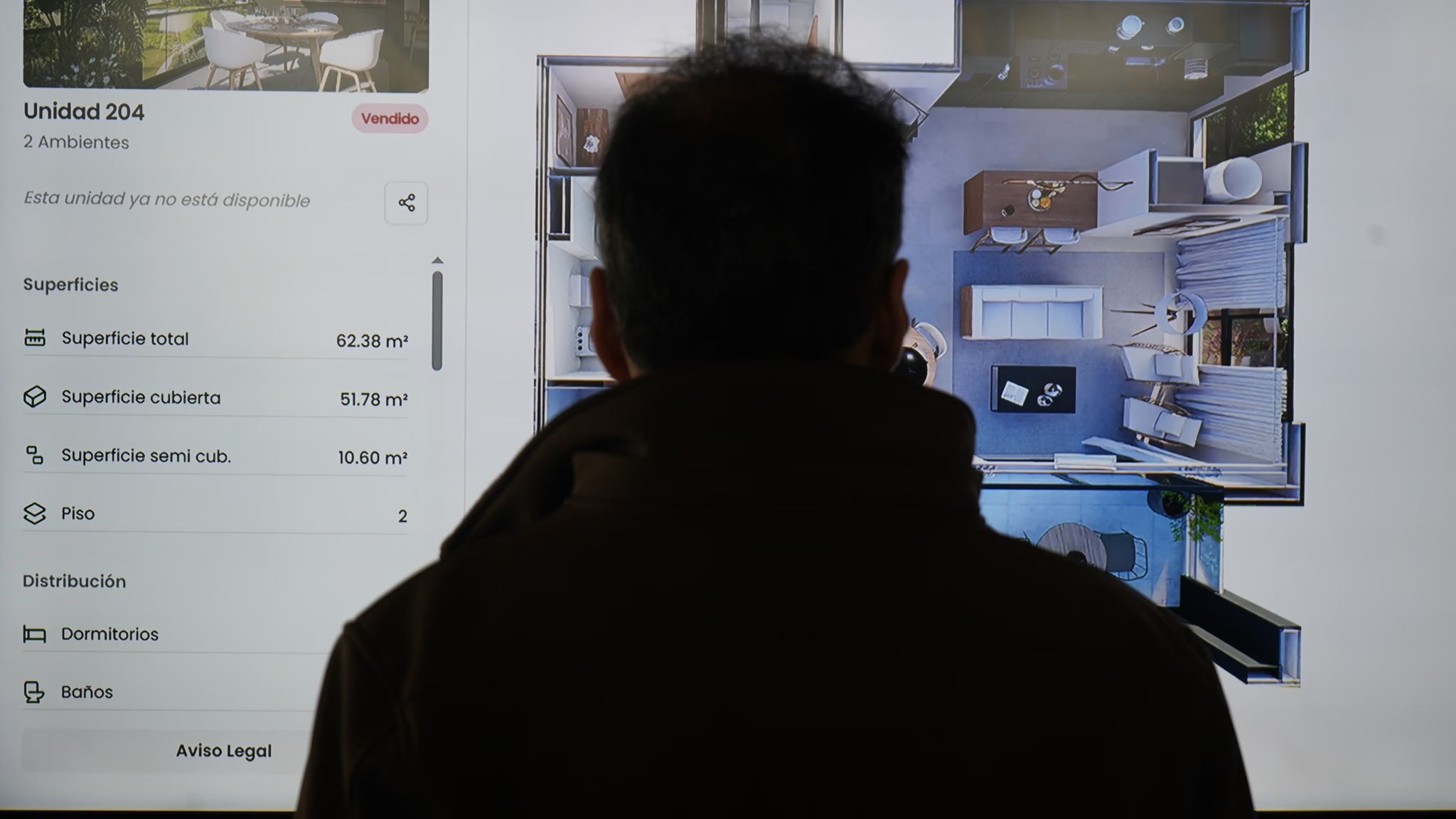
When we talk about Urbania, probably most people who know us immediately think of our Virtual Showroom.
And it makes sense.
It was one of the first products we developed and, to this day, it is our main entry point to the market. A digital and interactive space where a potential buyer can learn about a real estate development, tour it in 3D, explore its units, check availability, and obtain project information without needing to be physically present in a sales office.
But while the Virtual Showroom is a fundamental part of what we do, Urbania does not want to be just a Virtual Showroom company.
Our goal is much more ambitious: we want to become the No. 1 PropTech in the real estate market, building an ecosystem of solutions that supports developers, real estate agencies, and sales teams throughout the entire commercialization process of a project.
And for that, the Showroom is just the beginning.
From product to ecosystem
One of the things that motivates us the most at Urbania is that we are working on a problem much larger than simply "showing a real estate project."
Real estate has a particularity: behind every development, there is a huge amount of information, processes, and people involved.
There is the developer.
There is the marketing team.
There is the real estate agency.
There are brokers and sellers.
There is the end customer.
And, among all of them, data about units, prices, availability, reservations, inquiries, documentation, metrics, leads, and business opportunities constantly circulates.
However, many times all those parts operate using different tools that are not necessarily connected to each other.
The result is well known: duplicated information, manual processes, outdated data, and sales teams that end up dedicating a large amount of time to operational tasks instead of focusing on selling. That is where we see a huge opportunity.
Our vision for Urbania is to build a technological layer that connects this entire ecosystem.
We don't just want to create isolated tools.
We want the different solutions of Urbania to work together and for each one to enhance the others.
The Virtual Showroom: our gateway
The Virtual Showroom is probably the product we are best known for.
And it is also, in many ways, the product that best represents our philosophy.
A traditional real estate project can have renders, plans, a website, a commercial PDF, and a sales office. We believe that the experience can be much more interactive.
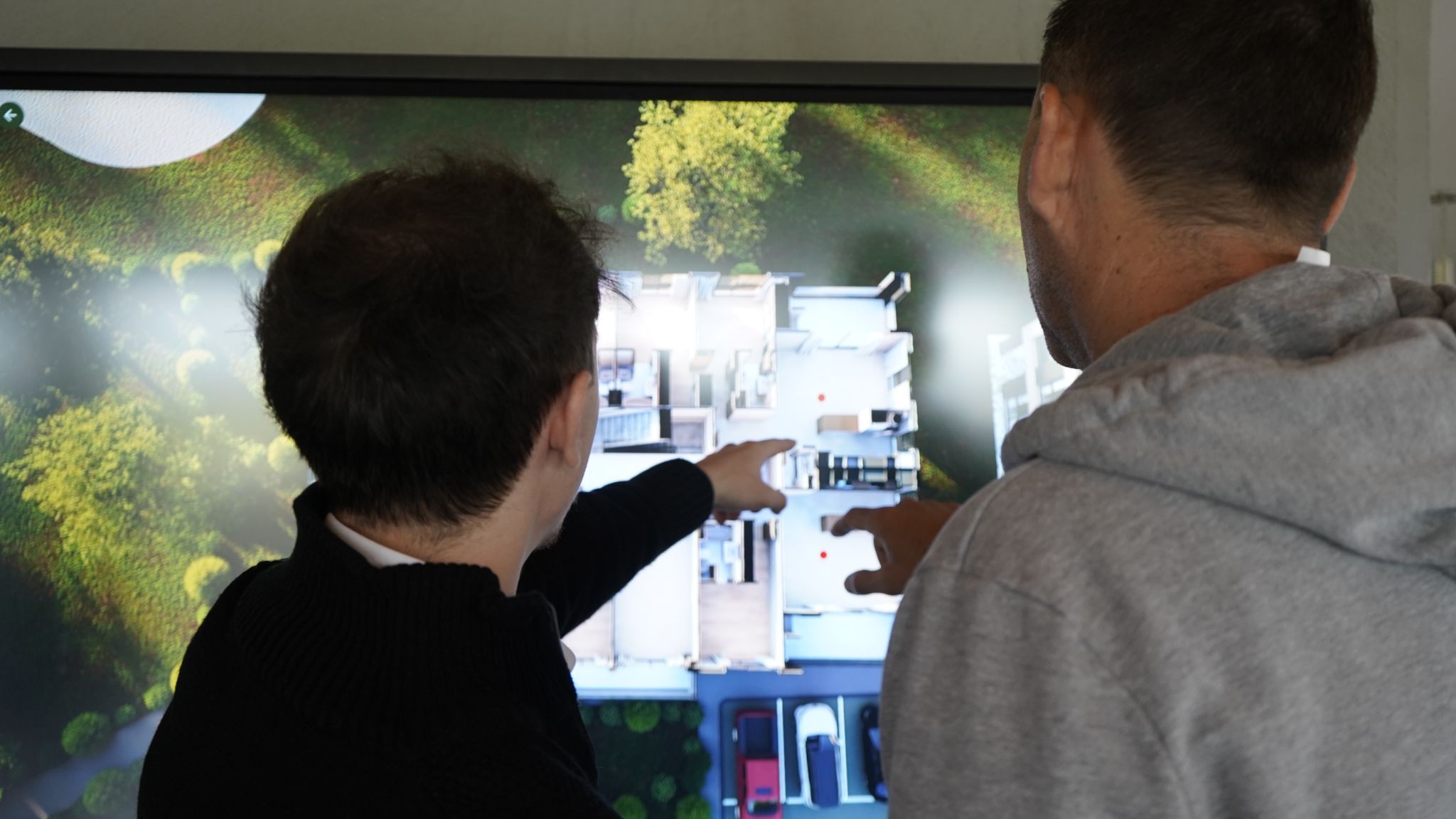
With a Virtual Showroom, a person can enter the project, explore its spaces, check out different floors, learn about the available units, visualize the features of the development, and start a conversation with the sales team.
But the most important thing is that we don't think of the showroom simply as a visual experience.We think of it as a sales tool.
That's why a showroom can integrate dynamic information about the project, unit availability, features of each property, lead capture, guided tours, artificial intelligence, and different tools designed to help the user advance in their buying process.
The difference may seem small, but for us it is fundamental: We don't want to make "a pretty 3D website." We want to build a new way to sell real estate..
An experience that continues after the showroom
Now, what happens after a potential buyer leaves their information?
That's where another fundamental part of the ecosystem comes in. Generating a lead is only the first step.
The real value lies in being able to understand who that lead is, what unit they were viewing, what information they consulted, what questions they asked, and at what stage of the sales process they are.
That's why we believe that technology shouldn't end when the user closes the showroom. It should continue.
The information generated during the digital experience can turn into commercial information. And that information can feed management, automation, tracking, and analysis tools.
The idea is simple: that each interaction with a project generates useful information to make better decisions.
Data to sell better
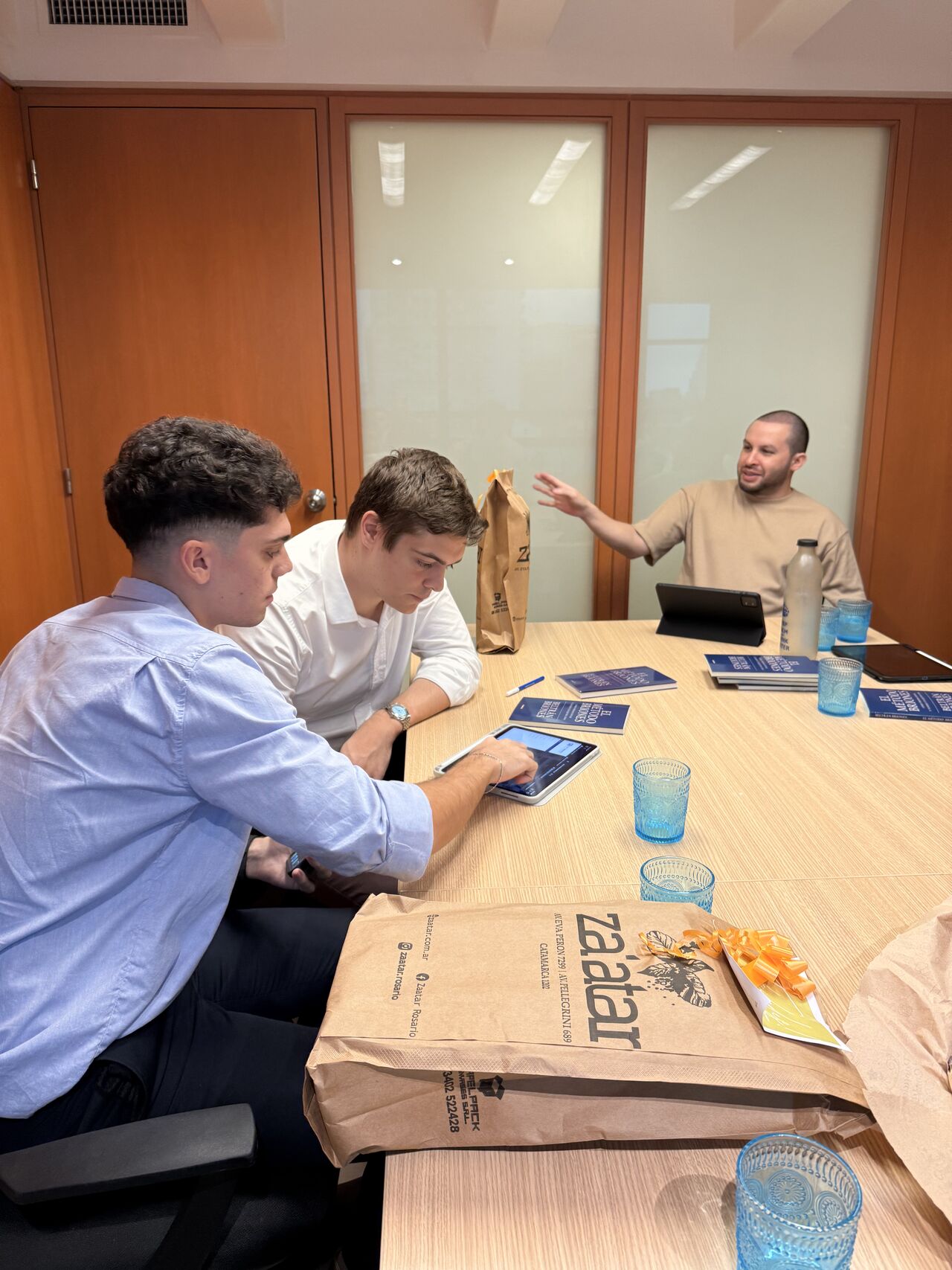
There is an enormous amount of information that a real estate project generates every day.
Which units receive the most inquiries.
What typologies generate the most interest.
What prices generate the most interaction.
Where potential buyers are coming from.
What project characteristics are most consulted.
How much time they spend exploring certain units.
What campaigns generate the best opportunities.
Traditionally, much of this information is scattered across different platforms or simply not recorded. We believe this can change.
One of the pillars of the Urbania ecosystem is precisely to transform that information into actionable insights for commercial teams and developers..
Because having data is not enough. The real value lies in being able to use it to answer questions like:
Which units should I prioritize commercially?
Which typology has the highest demand?
Which campaign is generating the best leads?
Where are we losing opportunities?
What is the buyer really looking for?
When technology starts to answer those questions, it stops being just a presentation tool and becomes a business tool.
Artificial Intelligence applied to real estate
Artificial intelligence will also play an increasingly important role within this ecosystem. But we are not interested in using AI simply because it is a trend. We are interested when it can solve concrete problems.
A buyer may have questions about a unit, the project, its amenities, financing, or specific characteristics.
An intelligent assistant can answer those questions immediately.
A sales team may need to analyze large amounts of information.
AI can help detect patterns.
A developer may want to understand what is happening with their projects.
The information accumulated by the platform can help generate analysis and recommendations.
And this is just the beginning.
We believe that in the coming years, artificial intelligence will radically change the way people discover, compare, and buy properties.
And we want Urbania to be at the center of that change.
A platform designed for the entire commercial cycle
When we talk about the "Urbania ecosystem", we are not just talking about having many products.
We are talking about building a platform where each solution has a purpose and, at the same time, can connect with others.
Let's imagine the complete journey.
A developer publishes a new project.
The project has its Virtual Showroom.
Potential buyers enter, explore the development, and inquire about different units.
These interactions generate leads and information.
The leads go to the sales team.
The team can follow up.
The data allows for analysis of what is working and what is not.
The availability of the units is kept up to date.
Marketing campaigns can be optimized based on the actual behavior of users.
And, as the project progresses, all that information continues to be part of the same ecosystem.
That is the Urbania we are building.
The challenge of digitizing a huge industry
Real estate is one of the largest industries in the world and, at the same time, one that still has a lot of room for digitization.
We do not believe that the digital transformation of the sector will happen overnight.
Nor do we believe that there is a single tool capable of solving all problems.
That is why our strategy is to build step by step.
We started with a concrete need: to improve the way real estate developments are presented and marketed.
We created the Virtual Showroom.
And from there, we began to discover something much bigger.
Each project we digitize allows us to better understand how commercial teams work.
Each user who interacts with our products provides us with new signals.
Each developer we work with shows us new problems we can solve.
And each of those experiences helps us build the next product.
The future of Urbania
We are still in an early stage. And that is precisely what excites us the most.
We have so much to build. We want to continue improving Virtual Showrooms, but we also want to go much further:
We want to develop new tools for commercial teams.
We want to improve the management and visualization of information.
We want to incorporate more and more artificial intelligence.
We want to connect marketing, sales, and data.
We want to facilitate the relationship between developers, real estate agencies, brokers, and buyers.
And, above all, we want all those tools to coexist within the same ecosystem.
Because our vision is not to build ten different products.
Our vision is to build a platform that becomes the digital infrastructure of real estate..
The Showroom is just the beginning.
If you know Urbania today through our Virtual Showroom, you are probably only getting to know a part of what we are building.
The showroom was our entry point.
It was the way we decided to start transforming an industry that, for a long time, was used to selling properties in a rather traditional way.
But our ambition is much greater.
We want Urbania to accompany a real estate project from the moment it begins its commercialization until long after its launch.
We want data, technology, artificial intelligence, and digital experiences to work together to make selling real estate simpler, more efficient, and, above all, smarter.
The Virtual Showroom is our flagship product.
But the Urbania ecosystem is our vision.
And we are just getting started.